
How Much Exercise Does My Dog Need?
There is no magic number that fits every dog. Here is how a working trainer actually figures out the right daily dose for the dog in front of him.
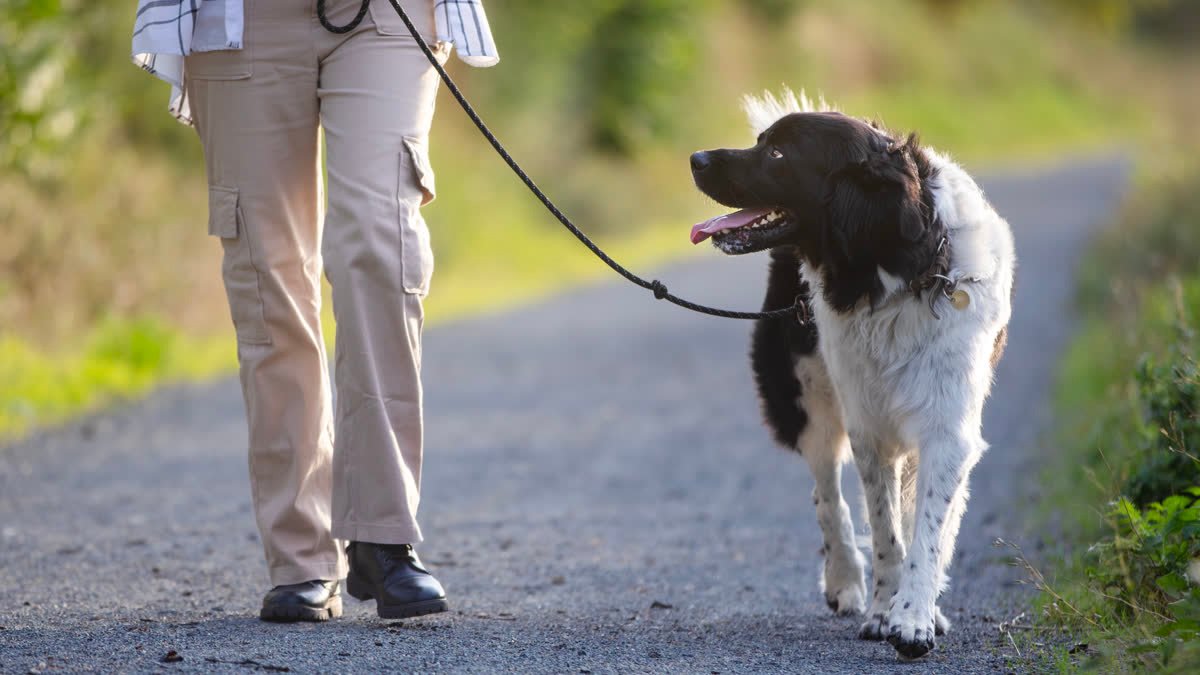
Most adult dogs need 30 minutes to 2 hours of activity a day. Low-energy breeds sit at the bottom, working and sporting dogs at the top. Age, health, and the individual dog move that number. Split it into walks, play, and a few minutes of brain work, then read your dog and adjust.
Why there is no single number
Owners ask me for a number, and I get why. The honest answer is that the number depends on the dog standing in your kitchen. Start with the Dog Exercise Guide for the full picture, then come back here for the math.
A two-year-old Border Collie and a nine-year-old Bulldog do not live in the same body. One was bred to run hills all day. The other struggles to breathe on a warm afternoon. Handing them the same routine sets one up to bounce off the walls and the other up to get hurt.
Three things drive the real number. Breed and what that breed was built to do. Age, which shifts the target at both ends of life. And the individual dog in front of you, because littermates can want wildly different things.
Forget the one-size answer. Your dog’s right dose comes from breed purpose, age, and the energy you watch in real time. Pick a starting point, then let the dog edit it.
Breed purpose sets the floor
Every breed was shaped for a job, and that job still lives in the dog. The American Kennel Club groups breeds by exactly this: herding, sporting, working, terrier, toy, and so on. A retriever wants to move and carry. A Greyhound wants short bursts and a long nap.
So the group your dog belongs to gives you a sane floor. A herding or sporting dog rarely thrives on a single slow lap of the block. A companion breed often does fine on less than its owner expects. You can check your breed group on the AKC breed listing in about a minute.
Age changes the rules
Puppies need movement, but not the kind people assume. Long forced runs pound joints that have not finished forming. A common vet guideline is roughly five minutes of structured exercise per month of age, twice a day, until growth plates close. Free play and sniffing fill the rest.
Senior dogs swing the other way. They still need daily movement to hold muscle and manage weight, just gentler and more frequent. Short, flat, regular outings beat one big push. When you are unsure where your aging dog sits, ask your vet before you change much.
Exercise targets by dog type
The table below gives you starting ranges, not commandments. Use it to land in the right neighborhood, then adjust over a week or two based on how your dog actually behaves. These ranges cover total daily activity, walks plus play plus structured work combined.
| Dog type | Daily activity | What it looks like |
|---|---|---|
| Low-energy / toy / brachycephalic | 20–45 min | Short walks, gentle play, plenty of sniffing |
| Average adult / companion | 45–75 min | Two walks plus a play or training session |
| Sporting / herding / working | 1.5–2+ hr | Walks, fetch, drills, off-leash romps, brain games |
| Puppy (growing) | 5 min per month of age, 2x | Short structured bursts plus free play and sniffing |
| Senior | 20–40 min, frequent | Gentle, flat, regular walks; light play |
Notice that even the calmest dog still needs daily movement. Vets broadly link regular activity to healthy weight and steadier behavior, and the American Veterinary Medical Association lays out the basics in its responsible pet care guidance. Movement is not optional. The amount is what flexes.
Quality beats raw minutes
A wired dog after a long walk usually got the wrong kind of exercise, not too little. Sniffing, problem-solving, and short training reps drain a dog in a way that a forced march does not. Ten minutes of nose work can settle a dog faster than an hour of pavement.
Build the day from a few ingredients. One or two real walks where the dog gets to sniff. A burst of play or fetch. A few minutes of training or a food puzzle. If your dog still cannot settle, the fix is often more brain work, not more distance. The same logic drives tiring out a high-energy dog without wrecking your own day.
Get a daily exercise number tuned to your dog
This gives you the ranges. mypooch builds a daily exercise plan for YOUR exact dog, factoring in breed, age, energy, and health history, then adjusts it each day based on a quick check-in. No more guessing whether you did too much or too little.
How to read your own dog
Charts get you close. Your dog gets you the rest of the way. The right amount of exercise leaves a dog pleasantly tired and able to settle, not collapsed and not bouncing. Watch the dog for a week and the body language tells you which way to nudge the dial.
Signs you are doing too little
An under-exercised dog finds its own jobs, and you will not like them. Chewing, digging, barking at nothing, pacing, and zoomies at 10pm all point the same direction. A dog that grabs the leash and drags you for the first ten minutes is usually telling you it needed this hours ago.
If that sounds like your house, dig into the specific signs your dog is under-exercised and bump the daily dose before you reach for any other fix. Many “behavior problems” are just unspent energy wearing a costume.
Signs you are doing too much
Overdoing it is quieter but real. Limping, stiffness the next morning, lagging on walks it used to love, or a dog so revved it cannot relax all signal too much of the wrong kind. Hard-surface running and endless fetch are the usual culprits.
Back off the intensity, swap pavement for grass, and add rest days. The ASPCA covers sane activity and enrichment basics in its general dog care guidance. When pain or persistent limping shows up, stop and call your vet rather than pushing through it.
Heat counts as too much, too. On a hot day, asphalt can burn paw pads and a heavy coat traps heat fast. Walk early or late, stick to shade and grass, and cut the session short the moment your dog slows down or pants hard.
Adjust, then hold steady
Pick your starting range, run it for a week, and watch. Too wired means add brain work or a second short session. Too sore means dial back and soften the surface. Once the dog settles well and moves comfortably, lock that routine in and keep it boringly consistent.
Common questions
Is one walk a day enough for a dog?
For a low-energy adult dog, one solid walk can be enough on its own. For most dogs it is not. A single neighborhood loop covers the physical box but leaves the brain idle, so you usually want a second short outing plus five to ten minutes of sniffing, training, or play to round out the day.
Can a dog get too much exercise?
Yes. Repetitive high-impact running on hard ground, marathon fetch sessions, and forced exercise on a growing puppy all carry real risk to joints and soft tissue. Watch for limping, reluctance to move the next day, or a dog that cannot settle because it is wired rather than tired. If you see those signs, scale back and talk to your vet.
How do I exercise my dog when I have no time?
Trade distance for intensity and brain work. A ten-minute sniff walk where the dog sets the pace, a few minutes of tug, or a scatter-feed in the yard can tire a dog faster than a slow forced march. Two short sessions usually beat one long one for a busy schedule.
Does mental stimulation count as exercise?
It counts as part of the picture, not a full replacement for movement. Sniffing, problem-solving, and training drain a dog mentally and take the edge off, but the body still needs real physical activity to stay healthy. The dogs that settle best get both every day.
Stop guessing the number. Let the app do the math.
This page hands you ranges to start from. mypooch turns that into a real plan for your exact dog, reads its energy with a daily check-in, and shifts the workload up or down so you hit the sweet spot instead of guessing. It does not replace your vet. It gives you the read a good trainer gives you in the first ten minutes.