
How to Tire Out a High-Energy Dog
You can walk a driven dog for an hour and watch it come home and start pacing. Distance is not the answer. The right mix is.
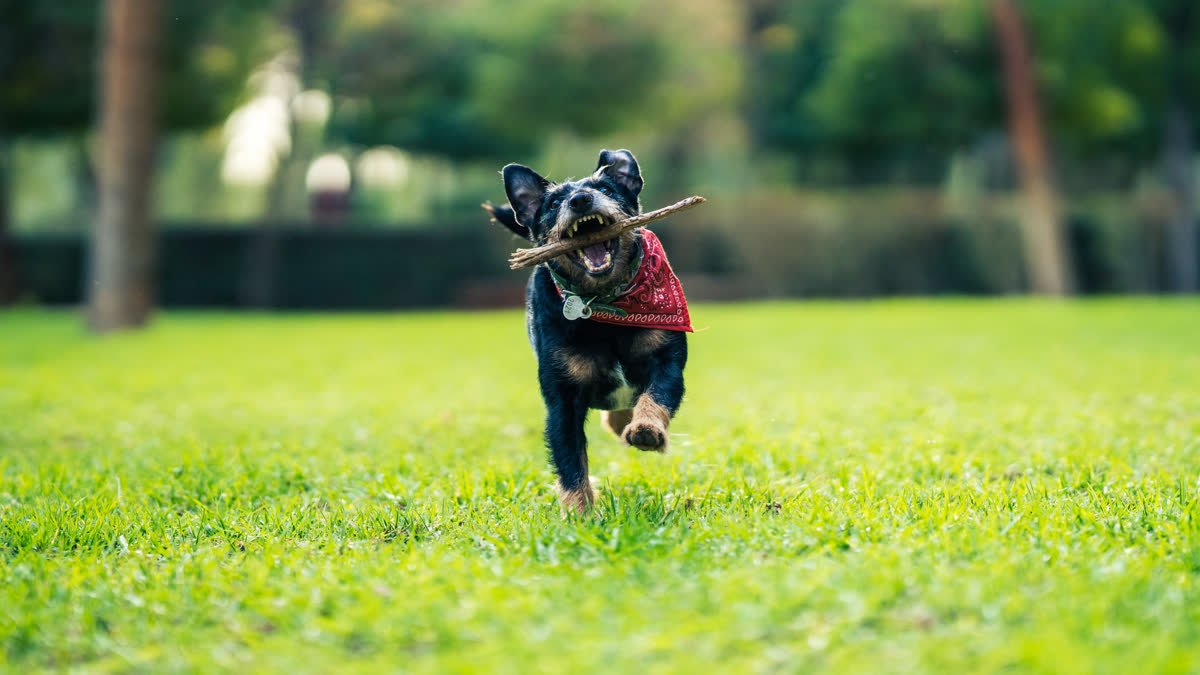
To tire out a high-energy dog, stop relying on distance and stack three kinds of work: short bursts of hard physical effort, scent and problem-solving games that drain the brain, and small reps of impulse control. Twenty to thirty minutes of that mix settles most dogs better than an hour-long walk ever will.
Why long walks don’t tire out a high-energy dog
A loose-lead stroll around the block is movement, not work. Start with the Dog Exercise Guide for the full picture, then come back here for the high-energy fix.
A driven dog is built to keep going. Walking burns a little energy, but it never asks the brain to engage or the body to truly empty the tank. So your dog comes home, shakes off, and starts hunting for a job.
That job becomes chewing the couch, barking at the window, or body-slamming you the moment you sit down. None of it is bad behavior. It is an under-worked animal looking for an outlet. The fix is rarely more miles.
High-energy breeds were bred to work alongside people for hours: herding, retrieving, running flat-out after game. A Border Collie, a Malinois, or a German Shorthaired Pointer still carries that engine whether or not you give it a job. A casual walk does not touch that wiring. If you want the real list of warning signs, read the signs your dog is under-exercised first so you know what you are actually solving.
Walking moves your dog. It does not work your dog. A high-energy animal needs effort and decisions, not just distance, before it will choose to lie down on its own.
The three kinds of tired (and how to stack them)
Real settling comes from hitting three systems at once: the body, the brain, and the self-control switch. Most owners only ever touch the first one, and they touch it the slow way.
1. Physical: short and hard beats long and slow
Sprints, fetch with a real chase, a flirt pole, tug, hill recalls. Ten focused minutes of explosive effort drains more than forty minutes of plodding. The American Kennel Club covers safe high-drive exercise options worth a read before you start. See the AKC guide to dog exercise for breed-by-breed context.
Keep the hard stuff capped. Build in a cool-down walk so the body comes down instead of staying revved. Hard cardio every single day can backfire, which I cover below.
Go easy with a puppy. Because young dogs have open growth plates, high-impact sprints and forced distance can damage joints that are still forming. Instead, lean on the brain-and-impulse work below until your vet clears harder effort. The same caution covers any senior or recovering dog too.
2. Mental: make the brain do the work
Scatter feeding in grass, snuffle mats, food puzzles, “find it” games, and short training sessions all force focus. A dog working a scent problem for ten minutes will lie down afterward like it ran a 5K. Sniffing alone lowers arousal, which is why a slow “decompression” sniff walk often beats a brisk one.
3. Impulse control: the switch most owners skip
Teach a settle on a mat, a “place” hold, waiting at thresholds, and pausing before the ball gets thrown. Learning to be still on cue is its own kind of tired, and it is the piece that actually carries into the house. A dog that can switch off is a dog that stops pestering you.
| Activity | Tires which system | Rough time to settle |
|---|---|---|
| Hour-long flat walk | Body only, lightly | Often none |
| 10-min flirt pole + cool-down | Body, hard | 30 to 60 min |
| Snuffle mat or scatter feed | Brain | 20 to 40 min |
| Mat settle + threshold waits | Impulse control | Carries into the house |
Your dog’s tank is not the same size as the dog next door
This gets you started. mypooch reads your dog’s energy and stress, then builds a tire-out plan sized to your exact dog (breed, age, drive, history) and adjusts it daily as the dog settles or ramps back up. It stacks the physical, mental, and impulse-control work so you stop guessing.
A 30-minute routine that actually settles your dog
Here is a session I hand owners of high-drive dogs. It moves through all three systems in order, ending on calm so the dog comes down instead of bouncing back up.
- Minutes 0 to 10, drain the body. Flirt pole, fetch with chase, or hill recalls. Push hard, then ease off the last two minutes.
- Minutes 10 to 25, work the brain. A sniff walk, a scatter feed in grass, or a food puzzle. Let the nose lead and the pace stay slow.
- Minutes 25 to 30, flip the calm switch. Mat settle with a chew or a few threshold waits. Reward stillness, not excitement.
Do not run the same hard cardio every day. Building an iron-fit athlete just raises the bar for what counts as enough. The ASPCA’s guidance on exercise and behavior is a solid, conservative reference here. See the ASPCA general dog care page.
Rest matters as much as work. A dog that never gets real downtime stays in a low simmer all day. Aim for genuine sleep between sessions, and treat enforced naps as part of the plan, not a failure of it.
When the weather or your schedule kills the routine
Rainy week, tiny yard, twelve-hour shift. The brain-and-impulse half of this plan runs entirely indoors, and it carries most of the load. My full breakdown of indoor exercise for dogs gives you a no-yard backup so a bad-weather day never turns into a wall-bouncing dog.
When tiring out is not enough
If your dog is destructive, panicked, or frantic even after solid work, that can point past plain energy toward anxiety or a medical issue. Do not exercise your way around it. Loop in your vet, and for serious behavior cases bring in a credentialed professional. The AVMA’s guidance on dog behavior problems is a sound place to start.
Common questions
Why your dog is still wired
Why is my dog still hyper after a long walk?
A walk is low-grade movement, not the kind of work that drains a driven dog. If your dog comes home from an hour-long walk and still bounces off the walls, the walk gave the body a workout but never asked the brain to do anything. Add sniffing, problem-solving, and short bursts of impulse control. Mental work fatigues a high-energy dog faster than distance ever will.
How long does it take to tire out a high-energy dog?
Less time than most owners think, if you use the right mix. Twenty to thirty minutes of combined physical and mental work usually beats an hour of plain walking. A flirt-pole session of ten minutes, followed by a fifteen-minute sniff walk and a short scatter feed, leaves most dogs ready to settle. Watch your dog, not the clock. Real fatigue looks like a dog choosing to lie down on its own.
Tools, cardio, and the limits
Can too much exercise make a dog more hyper?
Yes, and it is a mistake I see constantly. Hard, repetitive cardio every day builds a fitter athlete that needs even more to feel satisfied. It also floods the body with arousal hormones that take hours to clear. Cap the high-intensity work, build in real cool-down and rest, and lean on calm mental enrichment for the rest. A tired body and a wired brain is not a settled dog.
Is it bad to use a treadmill or backpack to tire out my dog?
Both can help, used carefully, but neither is a fix on its own. A weighted backpack adds resistance and can take some edge off a walk, though it should stay light and never be used on a dog with joint or growth-plate concerns. A dog treadmill needs slow, supervised introduction and is no substitute for outdoor sniffing and decision-making. Talk to your vet before adding load or distance for any young, senior, or recovering dog.
Run the routine on autopilot, not from memory
Reading the plan is the easy part. Doing it every day is where most owners drop off. mypooch hands you a Drill of the Day so you never have to decide what to run, logs each session, and shifts the intensity up or down as your dog settles. Keep the habit, lose the guesswork.