
Dog Training Tips That Actually Work
Most training advice fails because it ignores the dog in front of you. Here are the rules that decide every session, from a trainer who fixes the dogs others quit on.
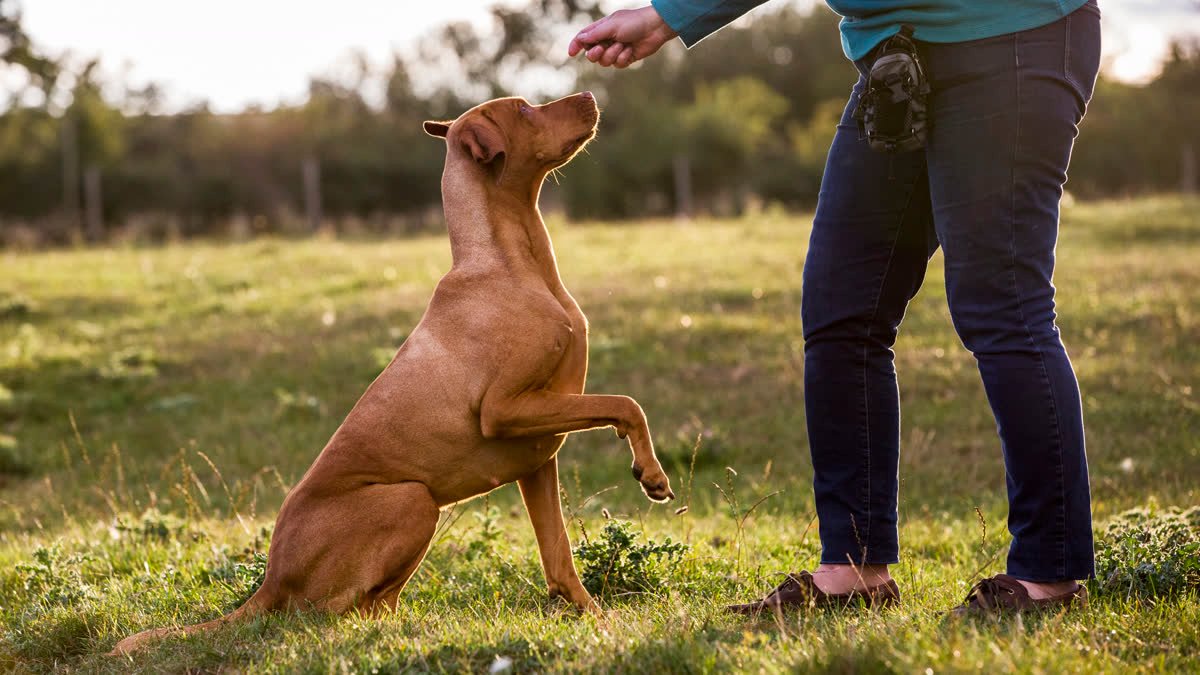
The dog training tips that actually work are simple: reward the behavior you want the instant it happens, keep sessions short, and train one clear skill at a time. Technique matters less than timing and consistency. Read your dog’s energy first, then pick a method that fits the animal in front of you, not the one in the book.
What are the basic rules of dog training?
Good training is boring on purpose. You repeat a few rules until they become reflex, and the flashy stuff takes care of itself. Start with the right mindset, the one that runs through everything in Dog Behavior Explained: you are not breaking a dog, you are building one. Three rules run underneath everything I teach in a client’s home.
First, mark the moment. Your dog repeats whatever pays off, so you have to tell them the exact instant they got it right. A clicker or a sharp “yes” works. Late by two seconds and you just rewarded something else entirely.
Second, pay for it. Food is information, not a bribe, and a reward your dog will actually work for does real teaching. You fade it later on a schedule. You do not lean on it forever, and you do not skip it while the skill is still raw.
Third, keep the bar low enough to win. Dogs learn in small jumps, so you reward the first scrap of the behavior before you ask for the polished version. Asking for too much too soon is the fastest way to a frustrated dog and a frustrated owner.
Timing, payment, and a low enough bar decide a session before technique ever enters the picture. Nail those three and almost any humane method will work.
Why timing beats technique every time
Owners obsess over which command to use. Your dog does not care about the word, it cares about what happens in the half-second after the action. The American Kennel Club’s training resources back this up: clear, consistent rewards build behavior faster than any particular cue.
Get the timing right and the dog connects cause to effect on its own. Get it wrong and you teach noise. That gap is why two owners can run the same drill and get opposite results.
Consistency does the rest. Every member of the house has to use the same word and pay the same behavior, or your dog learns the rules only apply to one person. Mixed signals are the single most common reason a smart dog looks untrainable.
Pick one cue word and hold it. Saying “down,” “lie down,” and “lay” for the same action splits the lesson into three. One sound, one action, one payment, repeated until it is automatic.
Which dog training problem are you actually solving?
Generic tips fail because they ignore the specific job in front of you. A dog that drags you down the street needs a different plan than a dog that flat refuses to listen. Naming the real problem first saves you weeks of spinning your wheels.
Most owner questions fall into a handful of buckets. Match yours to the right starting point below, then go deep on that one before you stack anything else on top.
| If your dog… | The real issue | Start here |
|---|---|---|
| Pulls hard on every walk | No value in staying near you | Stop a dog pulling on the leash |
| Ignores cues it clearly knows | Reward history is too thin | How to train a stubborn dog |
| Cannot hold focus for five seconds | Never built attention as a skill | Easy training tricks that build focus |
| Lunges, growls, or snaps | Fear or guarding, not defiance | Dog training for aggression |
| Repeats the same bad habit daily | The pattern is being rehearsed | Behavioral training for dogs |
When the problem is behavior, not obedience
Some issues are not training gaps at all. A dog that growls over a bone or panics when you leave is telling you something about how it feels, not whether it knows “sit.” Those live in Dog Behavior Explained, and they need a read before they need a drill.
Read the emotion first, then choose the work. A scared dog cannot learn while it is over threshold, so your job is to lower the pressure before you ask for anything. Confuse fear with stubbornness and you make it worse.
The same logic applies to habits that get rehearsed daily. A dog that bolts the fence or barks at the window every afternoon is practicing, and practice makes the behavior stronger. You change the picture and manage the environment before you expect the drilling to hold.
Name the problem before you pick a method. Obedience gaps want reps and rewards. Emotional problems want space, distance, and sometimes a credentialed pro.
Get a drill matched to the dog you own
This page gives you the rules. mypooch builds a Drill of the Day for YOUR exact dog (breed, age, energy, history) and adjusts it daily based on how the last one went. You stop guessing which tip applies and just run the next five-minute rep.
How do I build a training routine that actually sticks?
Consistency beats intensity. Five focused minutes, a few times a day, builds more than one long weekend session that leaves you both fried. You want training woven into normal life, not bolted on as a chore.
Here is the week I give new clients. It is light on purpose, because an owner who keeps it up beats an owner who burns out by Wednesday.
- Two or three micro-sessions a day. Five minutes each, before meals when your dog is keen and clear-headed.
- One skill at a time. Pick the single behavior that matters most this week and drill only that until it is solid.
- Train in new places. A cue learned in the kitchen is not learned on the sidewalk. Repeat it in the yard, the driveway, the park, lowering your standard each time the picture changes.
- End on a win. Stop while your dog still wants more, never after it falls apart.
Read the dog before you run the plan
The same plan can be perfect on Monday and wrong on Thursday. A dog that slept badly, missed its walk, or is recovering from a vet visit will not give you its best brain. Check the animal first, then decide whether to train hard, train light, or just go for a sniff.
This is the part most advice skips. There is no average dog, and the one you live with is not the one in the article. Your read of its energy on a given day matters more than any fixed schedule.
Keep it humane and know your limits
Stick to reward-based methods. The American Veterinary Medical Association and most credentialed bodies point owners toward positive reinforcement over punishment, because fear-based tools tend to create new problems. When a dog’s issue involves biting, guarding, or aggression toward people or other dogs, that is not a DIY project.
Bring in a CCPDT-certified trainer or a veterinary behaviorist for anything with a safety risk. For everyday manners like sit, recall, and a loose leash, the rules on this page are enough to get you moving. Build the easy wins yourself and call for help on the rest.
Common questions
How long should a dog training session be?
Keep it short. Five minutes, a few times a day, beats one thirty-minute slog. Dogs learn in tight reps when they are fresh, and they fall apart when they are bored or tired. End every session while your dog still wants more, not after the wheels come off.
Do treats spoil a dog or make training fake?
No. Food is information, not a bribe. You use it to mark and pay the exact moment your dog gets it right, then you fade it as the behavior gets solid. A reward your dog will actually work for is doing its job. You phase the food out on a schedule, you do not lean on it forever.
My dog won’t take the treat or is too distracted to train. Now what?
A dog that refuses food is usually too stressed, too full, or too far over threshold to learn. Move somewhere quieter and easier, drop the difficulty, and try a higher-value reward like chicken or cheese. Train before meals when your dog is hungry, not after. If your dog still ignores good food in a calm room, that points to stress or a health issue, so talk to your vet before you push harder.
Distractions, new places, and getting help
Why does my dog listen at home but ignore me outside?
Dogs do not generalize the way we assume. A sit learned in your kitchen is not the same sit on a busy sidewalk, because the picture changed. You have to re-teach each skill in new places, at lower difficulty, until it holds. Outside is harder, so you lower your standard and pay more at first.
When should I get professional help instead of training at home?
Get a credentialed professional the moment safety is on the table: biting, growling over resources, lunging at people or dogs, or any bite history. For those cases work with a CCPDT-certified trainer or a veterinary behaviorist. Everyday manners like sit, recall and loose-leash walking are fine to build at home.
Turn these tips into a daily plan
Reading rules is one thing. Running them on a tired Tuesday is another. mypooch reads your dog’s energy with a quick check-in, then hands you the right five-minute drill for the day and tracks what is working over time. The plan adjusts to your dog instead of the other way around.