
Indoor Exercise for Dogs: No-Yard Routines
No yard, no problem. Here are the indoor routines I give clients in tiny apartments to drain a dog that is climbing the walls.
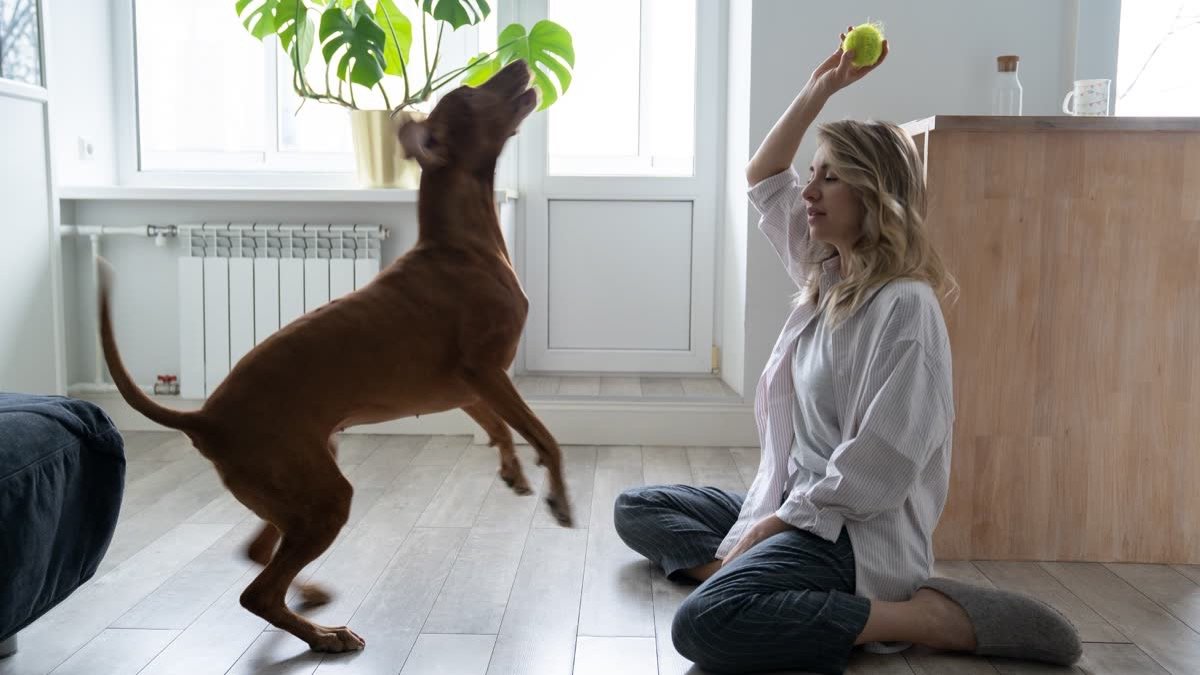
Indoor exercise for dogs works when you trade space for intensity. Short, high-effort bursts beat slow pacing every time. Run flirt-pole sprints, stair recalls, tug with rules, and scent hunts in two to four sessions a day, five to fifteen minutes each. Add a chew or puzzle to drain the brain. Stop when the dog’s recovery breaths slow down.
Why does intensity matter more than space indoors?
A bored dog in a small apartment is not short on square footage. The dog is short on a job. Start with the Dog Exercise Guide for the full picture, then come back here for the no-yard version.
People assume a dog needs room to run, so they feel guilty about the studio apartment. That guilt is misplaced. Instead, what drains a dog is effort and focus, not distance covered. A border collie pacing a backyard for an hour can still bounce off the walls at night.
Think about how dogs actually spend energy in the wild. They do not jog steadily for miles. They wait, they stalk, they sprint, they grab, then they rest. That stop-and-go pattern is what their bodies and brains are built for, and you can recreate it in a hallway.
You do not need a yard. You need short bursts of real effort that hit the chase-grab pattern a dog is wired for. Ten focused minutes can beat a lazy half-hour walk.
Mental work doubles the drain. A dog using its nose to solve a problem burns energy you cannot see, and it settles deeper afterward. The American Kennel Club covers this in its expert advice library, and it matches what I see in homes every week.
So the indoor goal is simple. Spike effort, engage the brain, then let the dog crash. Slow laps of a small room do none of that.
What indoor exercises for dogs actually burn energy?
Here are the routines I hand to clients with no outdoor space. None of them need more than a hallway or a couple of rooms. So pick two or three and rotate them so the dog never quite predicts what is coming. Throw a rug or yoga mat down first, both for traction on hard floors and to soften the thumping for the neighbors downstairs.
Flirt-pole sprints
A flirt pole is a stick with a rope and a lure on the end. You drag the lure along the floor and the dog chases. It triggers the full predator pattern in a tiny footprint, which is why it is my first pick for high-drive dogs. Build in a clean “out” cue and short pauses so you are training impulse control while you drain energy.
Stair recalls
If you have stairs, you have a cardio machine. Stand at the top, send the dog down to a tossed treat, then call it back up. After that, five or six reps will have most adult dogs panting. Still, skip this one for puppies, seniors, and any dog with joint or back trouble.
Scent hunts and puzzle feeding
Hide a handful of kibble around a room and tell the dog to find it. Nosework tires a dog out of proportion to the effort, and it works for every age and fitness level. Feeding meals from a puzzle toy or a snuffle mat stretches the same benefit across the day.
Tug with rules
Tug is not a free-for-all. Played with a take cue and a release cue, it builds a huge amount of effort and teaches the dog to switch arousal on and off. That on-off skill is worth as much as the physical burn. The right gear helps, so see my picks for the best toys for indoor dogs before you start.
| Indoor drill | Space needed | Best for |
|---|---|---|
| Flirt-pole sprints | Hallway | High-drive, athletic dogs |
| Stair recalls | One staircase | Healthy adult dogs |
| Scent hunts | Any room | All ages and fitness levels |
| Tug with rules | A few feet | Dogs learning impulse control |
Stack two short physical drills with one nose game and you have a session that lands harder than most walks. Run that twice a day and a wild apartment dog starts to settle.
Get an indoor plan built for your dog
This list gets you moving. mypooch builds an indoor exercise plan for YOUR exact dog (breed, age, energy, joint history) and adjusts it daily based on how the last session went. No yard required.
How do you know when your dog has had enough?
Indoor work is easy to overdo because the dog is excited and the space is small. Hard floors and tight turns are rough on joints, so quality of movement matters more than quantity. Read the dog, not the clock.
Watch for the recovery breaths to slow between bursts. Once a dog is genuinely tiring, it will offer sloppier behaviors, slow its sprints, and start looking for a place to flop. That is your cue to stop while the session is still a good memory.
Push past that point and you get the opposite of what you want. Instead, an overtired dog gets wired and cranky, the same way an overtired toddler does. End early and the dog comes back to the next session keen instead of sour.
Stop when recovery breaths slow and the dog starts hunting for a spot to lie down. Quitting while the dog still wants more keeps the routine fun and keeps joints safe.
Match the load to the dog. Puppies, seniors, flat-faced breeds, and any dog with a known orthopedic issue need gentler, flatter games and shorter bursts. For a dog on crate rest or recovering from surgery, drop the physical drills entirely and lean on nose games and puzzle feeding, which tire the brain without loading the body. Because of that, the AVMA’s guidance on pet owner resources is a good baseline, and your vet is the real authority on what your dog can take.
If your dog still seems restless after consistent indoor work, the energy may be a training gap rather than a fitness one. My guide on how to tire out a high-energy dog digs into that mix of body and brain.
Common questions
How long should indoor exercise for dogs last?
Most dogs need two to four short bursts a day, five to fifteen minutes each, not one long session. A flirt-pole sprint or scent hunt at full effort tires a dog faster than a slow lap of the block. So watch the dog, not the clock. When the recovery breaths slow and the offered behaviors get sloppy, you are done. Puppies and seniors get less; high-drive breeds need more.
Can indoor exercise really replace walks for dogs?
It can carry the physical load on a bad-weather day, but it cannot replace the sniffing and novelty a walk gives. Outdoor walks deliver scent variety that drains a dog mentally in a way no living room can. Use indoor work to keep the tank from overflowing between walks, or when going out is not safe. Still, get outside whenever you reasonably can.
What is the best indoor exercise for a high-energy dog?
Flirt-pole work is hard to beat for a high-drive dog. The lure triggers the chase-grab predator pattern, so the dog hits real intensity in a hallway-sized space. Pair short sprints with a clean out cue and impulse-control pauses so you drain the brain, not just the legs. Once the dog is panting, scent searches and stair recalls make good follow-ups.
Is running up and down stairs bad for my dog?
Controlled stair recalls are fine for most healthy adult dogs and burn energy fast. Skip stairs for puppies under a year, seniors, and breeds prone to joint trouble, since repeated impact stresses fragile joints. If your dog limps or has a known orthopedic issue, check with your vet first. When in doubt, pick a flat-ground game.
Know exactly how hard to push, every day
The hard part is reading your own dog. mypooch checks in on your dog’s energy and stress, then serves an indoor drill sized for that day and that dog. It logs what works and tunes the plan as your dog gets fitter.