Can Dogs Eat Cat Food?
Your dog raids the cat’s bowl every chance it gets. Here is what cat food actually does to a dog, and when a stolen meal turns into a vet call.
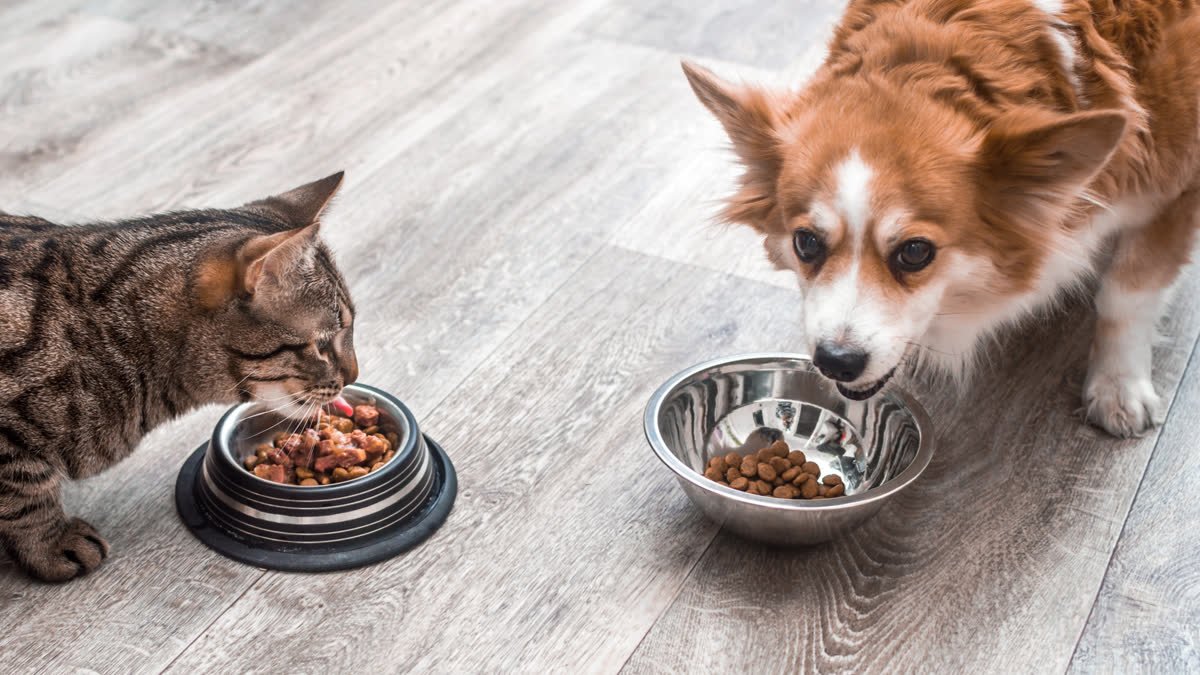
Yes, dogs can eat cat food in small amounts without harm, but it is not safe as a regular diet. Cat food carries far more protein and fat than a dog needs, so a stolen bite is fine while daily feeding causes stomach upset, weight gain, and over time can stress the pancreas. Cat food is also not nutritionally balanced for dogs.
Is cat food bad for dogs?
Cat food is not poison, and a few bites off the cat’s plate will not hurt a healthy dog. The trouble starts when cat food becomes a habit instead of an accident. Start with the Dog Health Basics guide for the full picture on feeding the dog you actually own.
Here is the core issue. Cats are obligate carnivores, which means they need a meat-heavy diet to survive. Dogs are not. A dog handles a wider mix of protein, fat, and carbs, so dog food is built lighter than cat food on purpose.
Cat food is loaded with extra protein, fat, and added taurine because that is what a cat’s body demands. In fact, the American Veterinary Medical Association notes that cats and dogs have genuinely different nutritional needs, which is why the recipes are not interchangeable. For more, read the AVMA pet owner resources.
So the answer splits two ways. A single stolen mouthful is a non-event for most dogs. A diet built on cat food is a slow problem you do not want to start.
Cat food is not toxic to dogs. It is simply too rich and not balanced for them, so the danger comes from how much and how often, never from one accidental bite.
What happens when a dog eats cat food?
A small amount usually does nothing worse than a happy dog and maybe a slightly looser stool the next morning. Generally, most owners never even notice. The body shrugs it off.
Larger amounts are a different story. The high fat content is the part that bites. For example, when a dog eats a big rich meal it is not used to, the pancreas can flare up, and that condition is called pancreatitis. As a result, it hurts and it can land you at the emergency vet.
Repeated feeding causes a slower kind of harm. The extra calories pile on weight, the rich formula keeps the gut unsettled, and the dog misses nutrients that proper dog food would supply. If your dog already has a touchy gut, this hits harder, which is why I cover it in the guide on food for sensitive stomachs.
Cat food versus dog food, side by side
The numbers tell the story better than I can. Here is roughly how the two stack up on the parts that matter for a dog’s gut.
| Nutrient | Cat food | Why it matters for dogs |
|---|---|---|
| Protein | Higher | More than a dog needs daily; the extra load is mainly a concern in dogs with existing kidney issues |
| Fat | Higher | Main trigger for stomach upset and pancreatitis risk |
| Calories | Denser | Easy weight gain that strains joints and the heart |
| Balance | For cats | Missing the ratios a dog needs for a complete diet |
Watch for vomiting, diarrhea that drags past a day, a hard or sore belly, no appetite, or a dog that goes flat and low. Those are your signals to call the vet rather than wait it out. When in doubt, the PetMD dog nutrition section is a solid, conservative read, but a phone call to your own vet beats any article.
Not sure if that cat-food raid is a problem?
mypooch reads your dog’s energy and gut signals in a 30-second check-in, then logs them on a vet-shareable timeline so you can spot a real pattern fast. It builds a feeding and gut plan for your exact dog by breed, age, and history, and adjusts it daily.
How do I keep my dog out of the cat food?
Willpower is not the answer here, because cat food is engineered to be irresistible. Your dog is not being bad. It is doing exactly what its nose tells it to do. You manage access instead of fighting instinct.
The fix is mostly logistics, and it works once you commit to it. Try these in order:
- Feed the cat up high. A counter, a shelf, or a cat tree your dog cannot reach solves most cases on day one.
- Use a timed or microchip feeder. The bowl opens only for your cat, so there is nothing for the dog to steal.
- Separate feeding rooms. Feed the cat behind a door or a baby gate the cat clears and the dog cannot.
- Pick up the bowl. Free-feeding the cat leaves a buffet out all day. Set meal times and clear the bowl after.
- Reward the leave-it. Pay your dog for walking past the cat’s spot, so ignoring it becomes the habit.
One more thing on the bigger picture. If your dog is constantly scavenging, that hunger drive can tie into energy and routine, not just appetite. The AKC nutrition advice hub is worth a read for matching food to your dog’s real needs.
Stop relying on training your dog to resist the cat bowl. Move the cat’s food out of reach and the problem mostly disappears on its own.
Common questions
Is a small amount of cat food toxic to dogs?
No. Cat food is not toxic to dogs, so one accidental taste will not poison yours. The risk is the rich recipe, not a hidden poison, which is why it only shows up when a dog eats cat food often or eats a big pile at once.
Why does my dog love cat food so much?
Cat food is engineered to be irresistible. It runs higher in protein and fat and smells meatier, so it hits your dog like a rich dessert. That pull is normal, so you manage access instead of trusting willpower.
Is cat food worse for puppies, and does wet versus dry matter?
For a puppy, yes, treat it as a bigger deal, because a small stomach and a developing gut handle rich food poorly. Wet cat food is usually fattier than dry, so it upsets a dog faster, but neither type is built for dogs. Either way, keep a puppy off cat food and call your vet if the stool stays loose.
What to watch for after a cat-food raid
What happens if my dog eats cat food every day?
Daily cat food usually means loose stool, gas, and creeping weight gain from the extra fat and calories. Over months it can stress the pancreas, and the diet still leaves nutrient gaps. As a result, the fix is simple: switch back to dog food and talk to your vet.
When should I call the vet after my dog eats cat food?
Call your vet if your dog ate a large amount, especially an oily formula, or if you see repeated vomiting, diarrhea past a day, a hard belly, no appetite, or low energy. Those signs can point to pancreatitis. In short, a dog with a sensitive stomach or a known health issue warrants a call sooner.
Build a feeding plan for the dog you actually own
Every dog handles food differently, and the average dog does not live in your house. mypooch builds a gut and feeding plan around your exact dog (breed, age, energy, history) and adjusts it daily as you log how meals land. Catch trouble early and bring the timeline straight to your vet.