
Dog Separation Anxiety: Signs and a Daily Plan
Your dog falls apart the second you reach for your keys. Here is how to read it, and a calm daily plan that teaches alone time instead of fighting the panic.
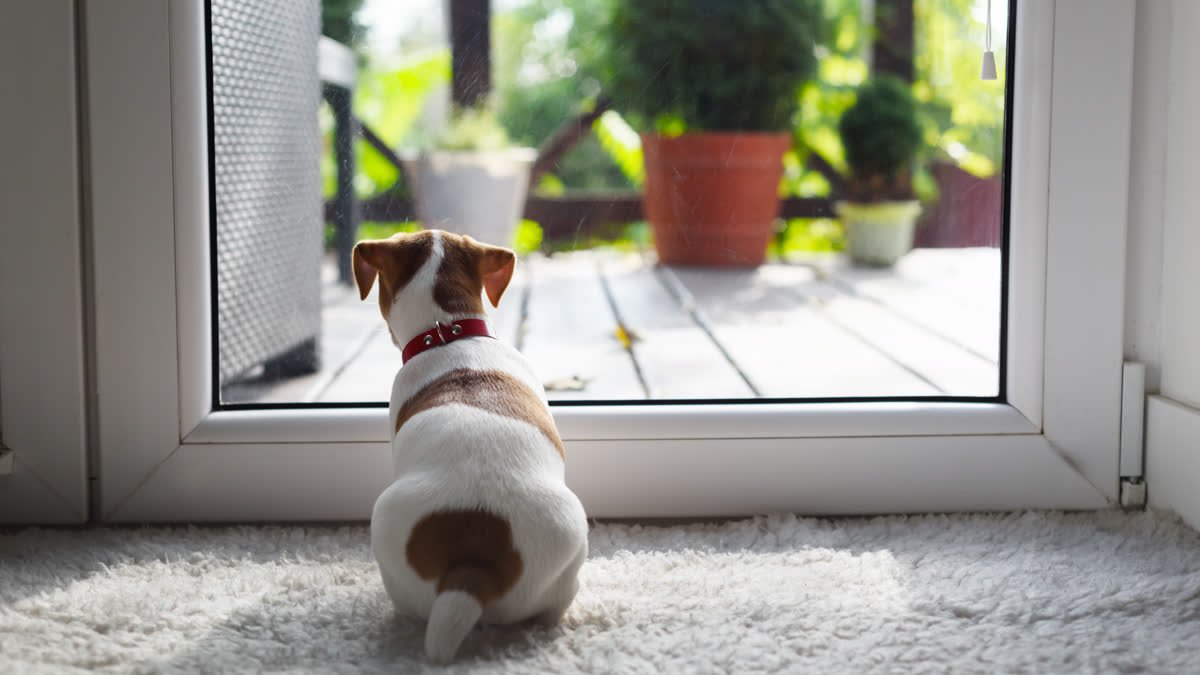
Dog separation anxiety is panic, not bad manners. The dog reads your departure as a threat and floods with stress: howling, drooling, pacing, or clawing at exits within minutes of you leaving. You fix it by teaching short, calm absences your dog can handle, then stretching them slowly so being alone stops feeling dangerous.
What does dog separation anxiety actually look like?
Real separation anxiety is a panic response, not a dog being dramatic or spiteful. For the full map of how stress shows up in everyday behavior, start with the Dog Behavior Explained guide. It gives you the wider picture this problem sits inside.
The tell is timing. A dog with separation anxiety unravels in the first ten to thirty minutes after you walk out, and the meltdown points at exits: the front door, the window, the crate latch. Owners often blame boredom or stubbornness. Most of the time the dog is genuinely scared.
You cannot read this off a still house. Set a phone to film a few of your departures, then watch the first half hour. Calm dogs settle, sigh, and nap. Anxious dogs pace, whine, drool onto the floor, and circle back to the door again and again.
The common signs, ranked by how loud they are
Some signs are obvious to the neighbors. Others are quiet and easy to miss until you check the camera. Watch for this cluster, not any single item on its own.
- Vocalizing: nonstop barking, howling, or a high whine that starts almost as soon as the door shuts.
- Destruction at exit points: scratched door frames, chewed window sills, a bent crate door. Not a random shoe.
- Drooling and panting: a puddle by the door or a soaked bed with no heat to explain it.
- House soiling: a fully potty-trained dog that pees or poops only when left alone.
- Pacing or escape attempts: a tight loop near the door, or injuries from trying to break out.
One chewed slipper is boredom. A drooling dog that has scratched the paint off the door in twenty minutes is panic. The ASPCA draws the same line, and it matters because the fix is different for each.
Separation anxiety hits fast and aims at the exits. Boredom builds slowly and targets whatever is handy. Film your departures before you decide which one you are dealing with.
Why does it happen, and what makes it worse?
There is no single cause. Some dogs are wired sensitive from puppyhood. Others develop it after a big change: a move, a new schedule, a death in the home, or a long stretch of constant company that suddenly ends.
Rehoming and shelter histories raise the odds too. A dog that has already lost one home can read every departure as another abandonment. None of this is your fault, and it is not a sign your dog is broken.
The trap is what we do by accident. Big emotional goodbyes, frantic reunions, and letting the dog shadow you into every room all teach the dog that your presence is the only safe state. The night version of this overlaps with what I cover in stopping a dog barking at night, since a dog that cannot settle alone in daylight rarely settles alone in the dark.
Anxiety or just under-stimulated?
Plenty of “anxiety” cases are really a smart dog with nothing to do. The two need different plans, so sort them before you spend a month on the wrong one.
| What you see | Separation anxiety | Boredom or under-exercise |
|---|---|---|
| When it starts | Within minutes of you leaving | An hour or more in, or off and on |
| Target | Doors, windows, crate, escape routes | Toys, trash, random household items |
| Body state | Drooling, panting, frantic, can’t settle | Relaxed between bursts, naps fine |
| What helps | Gradual alone-time training | More exercise and enrichment |
If the column on the right fits your dog, lead with a hard walk and a stuffed food toy before you leave. If the left column fits, exercise still helps, but the real work is teaching your dog that being alone is safe.
Not sure if it is panic or boredom?
mypooch reads your dog’s energy and stress through a quick daily check-in, then builds a separation-anxiety plan tuned to your exact dog (breed, age, history) and adjusts it as your dog improves. It tells you whether to lead with exercise or alone-time work.
A daily plan that builds calm alone time
The core idea is simple. You teach alone time in doses your dog can handle, then stretch the doses so slowly that the panic never gets a chance to fire. Trainers call this desensitization. I call it not scaring your dog.
Run the steps below as your daily routine. Keep sessions short, end on calm, and never push to a length where your dog cracks. A blown session sets you back further than a skipped one.
The step-by-step routine
- Drain energy first. A walk or play session before any alone-time practice gives you a calmer dog to work with.
- Make departures boring. No drawn-out goodbyes. Pick up your keys, then sit down. Put on your coat, then make coffee. Break the link between the cues and you actually leaving.
- Start with seconds. Step outside, shut the door, come back before your dog reacts. One second counts. Repeat until it bores you both.
- Stretch slowly. Build from seconds to minutes over days, not hours. If a length triggers panic, drop back to the last easy one.
- Keep reunions flat. Walk in calm, ignore the dog for a beat, greet only once paws are on the floor. Big reunions raise the stakes of every goodbye.
Give the dog something good to do while you are gone. A frozen stuffed food toy turns your exit into the start of a treat instead of a loss. The American Kennel Club backs this gradual approach, and it works because it changes how the dog feels, not just how it acts.
Set your expectations honestly. This is weeks of patient reps, not a weekend fix. Mild cases often turn the corner in two to four weeks of daily practice. Moderate cases run six to twelve weeks, and the slow, boring repetition is the work. Most owners quit because they expected days, so plan for the long version and treat any faster result as a bonus.
When to call a professional
Some cases are past a home plan, and pushing through can get your dog hurt. Call your vet if your dog injures itself, breaks teeth or claws on the crate, refuses food when alone, or shows no progress after several weeks of honest practice.
Your vet rules out pain and other medical causes first. From there, a veterinary behaviorist or a CCPDT-certified trainer can build a structured plan and decide whether anti-anxiety medication should support the training. Medication is not a failure. For severe panic it is often what makes the training possible.
Progress comes from absences your dog can handle, stretched slowly. End every session calm. Self-injury, refusing food, or no movement after weeks means it is time to loop in your vet.
Common questions
How do I know if my dog has separation anxiety or is just bored?
Boredom builds slowly and often targets one thing, like a chewed shoe an hour after you leave. Separation anxiety starts within minutes of your exit and looks like panic: nonstop howling, drooling, pacing, or trying to dig through a door. Film a few departures. If the meltdown hits in the first ten to thirty minutes and centers on exit points, you are likely dealing with anxiety, not a dull afternoon.
Can a dog grow out of separation anxiety on its own?
Rarely, and waiting usually makes it worse. Every panicked departure rehearses the panic and wires it deeper. Mild cases can improve with a steady routine and gradual alone-time practice. Moderate to severe cases tend to escalate without a real plan, so the smart move is to start short departures now rather than hope it fades.
Does getting a second dog fix separation anxiety?
Usually not. True separation anxiety is about the bond with you, not a lack of company, so a second dog often panics right alongside the first. You can end up with two anxious dogs instead of one. Fix the alone-time training first. Add a second dog later only if you actually want one, never as a treatment.
Setup and when to escalate
Should I crate my dog or leave a room open for separation anxiety?
It depends on how your dog reads the crate. A dog that already loves its crate as a den can feel safer in it. A dog that panics, claws the door, or breaks teeth on the bars is telling you the crate is a trap, not a refuge. Never force a panicking dog into a crate. Try a gated open room or a dog-proofed space instead, and watch the camera to see which one keeps your dog calmer.
When should I see a vet or behaviorist for separation anxiety?
Call your vet if your dog hurts itself, breaks teeth or claws on a crate, will not eat when alone, or the panic is not improving after several weeks of practice. A veterinary behaviorist or CCPDT-certified trainer can rule out pain, build a structured desensitization plan, and decide whether anti-anxiety medication should support the training. Self-injury or refusing food is a same-week call.
Get a separation plan that fits your exact dog
This gets you started. mypooch builds a separation-anxiety plan for YOUR dog (breed, age, energy, history), sets the right starting absence, and stretches it daily based on how your dog actually responds. The progress timeline is vet-shareable if you escalate.