
How to Stop a Dog Pulling on the Leash
Your dog drags you down the block and you brace like you are walking a sled team. Here is the method that fixes it without a war over the leash.
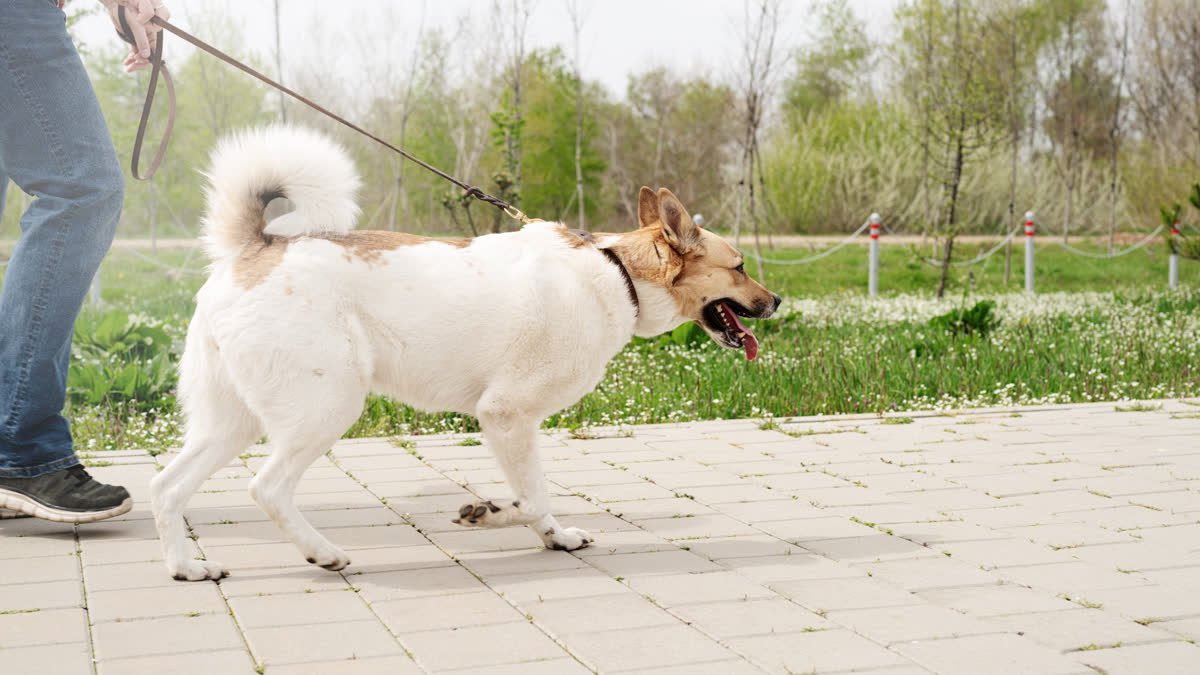
To stop a dog pulling on the leash, stop moving the instant the leash goes tight and only walk again when it slackens. A loose leash keeps the walk going. A tight leash ends it. Pair that with a front-clip harness and a steady reward for staying near your side, and most dogs change within a few weeks.
Why does my dog pull on the leash?
Your dog pulls because pulling works. Every time the leash goes tight and you keep walking, your dog learns that leaning into the collar gets them to the next smell faster. Reward a behavior and you get more of it. For the bigger picture on how reward shapes everything you teach, start with the Dog Training Tips guide.
There is a second force at play, and it is physical. Dogs have an opposition reflex. Push or pull against them and they instinctively push back into the pressure. So when you yank the leash to slow your dog down, you are actually telling their body to lean harder.
Most pulling is not defiance. It is a fast, excited dog walking at a slow human pace with too much energy to burn. Your dog wants to get to the park, the hydrant, the other dog. You are the brake, and the brake is annoying.
Pulling is a trained habit, not a personality flaw. Your dog repeats it because it has worked on every walk so far. Change what the pull earns and you change the behavior.
The under-exercised dog pulls hardest
A dog that has been crated all day hits the sidewalk like a coiled spring. No method holds up against that much pent-up drive. If your walks feel like a tug of war from the front door, your dog may simply need more movement before you ever ask for manners.
The American Kennel Club notes that exercise needs swing widely by breed and age, and an under-worked dog often shows it on the leash first. A quick fetch session or a sniffy warm-up before the real walk takes the edge off. A calmer dog can actually hear you.
How do I stop my dog from pulling, step by step?
The core method is simple to say and harder to stay patient with. You make a loose leash the only thing that keeps the walk moving. The first few sessions are slow because you stop a lot, and that is the point.
Work in a boring spot first, like your driveway or a quiet street. A dog cannot learn this at the dog park with ten distractions firing at once. Build the skill where it is easy, then take it somewhere harder.
The stop-and-reset method
- Set your line. Use a fixed four to six foot leash. Decide which side your dog walks on and keep it consistent.
- Walk forward. The moment the leash goes tight, stop dead. Plant your feet. Say nothing and do not yank.
- Wait for slack. Stand still until your dog eases off and the leash loosens, even slightly. Most dogs turn back to check on you.
- Reward and resume. Mark that slack with a “yes” or a click, hand over a small treat near your leg, then start walking again.
- Repeat without anger. You may stop fifteen times on one block at first. Each stop is a rep. The pattern lands faster than you expect.
Some trainers add a turn instead of a full stop. When the leash tightens, you quietly pivot and walk the other way. Your dog learns that pulling sends you both backward, so staying near your leg is the only way to make progress.
Never let a tight leash earn forward motion. If your dog reaches the goal by pulling even once, the lesson resets. Consistency across every walker in the house matters more than any single technique.
Reward the position you actually want
Stopping the pull is only half the job. You also have to pay for the good stuff. When your dog walks near your leg with a loose leash, drop a treat or a calm word in often at first. You are building a habit, and habits need a reason.
Keep the rewards near your hip, not out in front. A treat held forward pulls your dog ahead, which is the position you are trying to break. Over a couple of weeks you fade the food and the loose leash becomes the default.
A walk plan tuned to your dog, not a generic one
A Lab puppy and a wired-up cattle dog need different timelines on this. mypooch builds a loose-leash drill for your exact dog (breed, age, energy, history), tells you how long each session should run, and adjusts the plan daily as your dog improves.
What gear and routine make it stick?
Gear does not train your dog. It buys you control while the training takes hold, and it protects your dog’s neck in the meantime. The wrong equipment can quietly make pulling worse, so the choice matters more than people think.
A front-clip harness is the workhorse for most pullers. The leash attaches at the chest, so a pull gently turns your dog back toward you instead of letting them drive forward. The ASPCA recommends harnesses over neck collars for dogs that pull, since constant collar tension can strain the throat and trachea.
| Gear | Effect on pulling | Best for |
|---|---|---|
| Front-clip harness | Redirects forward force back toward you | Most pullers, training phase |
| Head halter | Strong steering control, needs slow intro | Big, powerful pullers you can barely hold |
| Back-clip harness | Can trigger opposition reflex, often worse | Small dogs that already walk nicely |
| Flat collar | Neutral, but strains the neck on hard pulls | ID and tags, not heavy pullers |
| Retractable leash | Rewards pulling with more line, avoid | Open sniffing time once trained |
A head halter is the next step up for a big dog you can barely hold. It steers the head, so even a strong puller follows your lead with little force. Introduce it slowly over several days with treats, because most dogs hate it at first and need time to accept it.
Skip the retractable leash entirely while you train. It teaches your dog that pulling extends the line and earns freedom, which is the exact habit you are fighting. A fixed leash gives you a clear, consistent boundary.
Pulling versus lunging at other dogs
There is a real difference worth naming here. A dog that drags you toward smells is pulling, and the stop-and-reset method fixes that. A dog that fixates, barks, or lunges at other dogs is reactive, and that is a separate problem.
Reactivity needs a counter-conditioning plan and often distance work, not just leash mechanics. For a sense of what that looks like, the ASPCA behavior resources cover it well. If your dog has ever bitten or the lunging scares you, loop in a certified behavior pro before you push it.
Short daily reps beat one long battle
Five to ten focused minutes a day beats one frustrated hour on the weekend. Dogs learn in small, repeated doses, and short sessions keep you patient enough to stay consistent. End while it is still going well, not after it falls apart.
Pair the training with enough real exercise so your dog is not bursting with energy at the leash. The same principle runs through training a stubborn dog: meet the physical need first, then the manners come far easier. A drained dog is a teachable dog.
Track your stops over time. If you went from fifteen halts a block to three, that is real progress even if it does not feel dramatic on any single walk. Judge by the trend across two weeks, not by one rough morning in the rain.
Gear plus method plus enough exercise is the whole recipe. Drop any one of the three and pulling creeps back. Keep all three steady and a loose leash becomes your dog’s normal.
Common questions
How long does it take to stop a dog pulling on the leash?
Most dogs show a real change in two to four weeks of short, daily sessions. The first few walks feel slow because you stop a lot. Once your dog learns that a tight leash ends the walk and a loose leash keeps it going, progress speeds up. Hard pullers with months of practice take longer, so judge by the trend, not by one bad day.
Does a harness stop a dog from pulling?
A front-clip harness reduces pulling power and protects your dog’s neck, but it does not teach loose-leash walking on its own. Gear buys you control while you train. The behavior changes when you reward a loose leash and stop moving on a tight one. A back-clip harness can actually make pulling worse because it triggers the opposition reflex.
Why does my dog pull harder when I pull back?
Dogs have an opposition reflex: push or pull against them and they push back into the pressure. Yanking the leash makes your dog lean harder into the collar, not less. That is why the stop-and-reset method works better. You remove all forward motion instead of fighting the pull, so the leash stays loose and the reflex never fires.
Should I use a retractable leash to fix pulling?
No. A retractable leash teaches a dog that pulling extends the line and earns more freedom, which is the opposite of what you want. It also keeps constant tension on the collar. Use a fixed four to six foot leash while you train loose-leash walking. Save longer lines for sniffing time in safe, open spaces once the basics hold.
Get a daily loose-leash drill that adapts as you go
This method gets you started. mypooch turns it into a day-by-day plan for your exact dog, reads how the last session went, and dials the difficulty up or down so you are never stuck guessing what to work on next.