
Dog Behavior Meaning: Read What Your Dog Tells You
Your dog talks all day long with its body. Learn to read the whole picture, not one twitch, and most “mystery” behavior stops being a mystery.
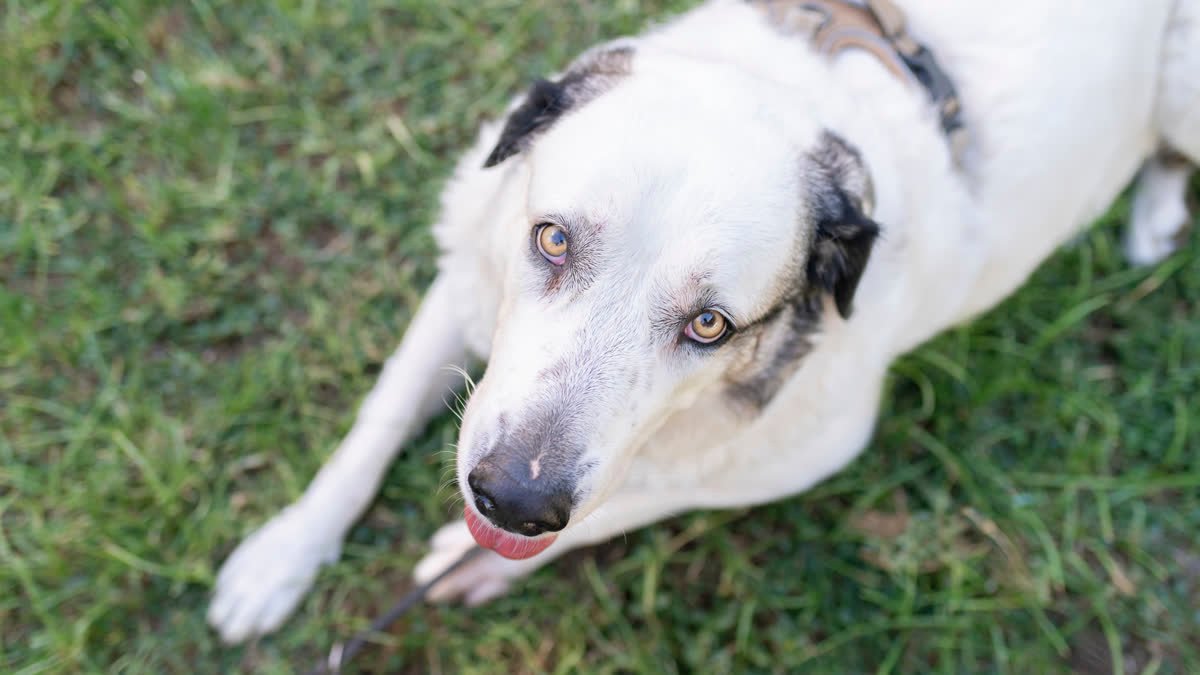
Dog behavior meaning comes down to one idea: every signal is communication about how your dog feels right now. Read the whole body together (tail, ears, eyes, mouth, posture) and read the situation around it. One signal alone tells you almost nothing. The cluster, in context, tells you what your dog is actually saying.
What does dog behavior actually mean?
Dog behavior is not random and it is not mischief. It is communication. Your dog uses its body, its voice, and its choices to tell you how it feels about whatever is happening right now. This guide walks you through how to read that language so you stop guessing.
Here is the part most owners miss. There is no average dog. The dog you live with is not the dog in the breed book or the viral video. Two dogs can do the exact same thing and mean two opposite things, because behavior only carries meaning in context.
Take the classic example. A wagging tail looks friendly, so people reach out and get snapped at. The wag was real, but it signaled arousal, not welcome. The stiff body and hard stare around it told the true story. Reading one signal in isolation is how good people get bitten by nervous dogs.
So the goal is not to memorize a phrasebook of single gestures. The goal is to read clusters of signals together, then layer the situation on top. A trainer does this in the first ten minutes of a session. You can learn the same read with practice.
Behavior is information, not defiance. Your dog is always telling you something. Your job is to read the whole body in context instead of reacting to one twitch.
Why “bad behavior” is usually a message you missed
When owners call something a behavior problem, the dog is often just communicating a need that nobody answered. A bored, under-worked dog chews the couch. A scared dog growls before it bites. An over-aroused dog jumps and mouths because nobody taught it another way to land that energy.
None of that is the dog being difficult. It is cause and effect. Find the message under the behavior and the behavior usually changes, because you are finally addressing the real driver instead of the symptom you can see.
How do you read dog body language?
You read five channels at once, then you read the room. The five channels are the tail, the ears, the eyes, the mouth, and the overall posture. Each one shifts fast, and the meaning lives in how they line up together, not in any single part.
The American Kennel Club has a solid primer on reading these signals if you want a second source. The AKC guide to dog body language covers the same channels a trainer scans by reflex.
Tail, ears, eyes, mouth, posture
The tail tells you arousal level and direction of feeling, not the feeling itself. Loose and sweeping low usually reads calm. High and stiff with a fast tight wag reads tension. A tucked tail reads fear. You still need the rest of the body to confirm.
Ears point toward whatever has the dog’s attention. Forward and soft means interest. Pinned flat back often means fear or appeasement. Eyes matter too: soft, blinking eyes are relaxed, while a hard stare or “whale eye” (the whites showing) signals a dog that is stacking up stress.
The mouth rounds it out. A loose, open, slightly panting mouth is a comfortable dog. A tight, closed mouth, especially with a freeze in the body, is a dog telling you to back off. Posture ties it together: weight forward, on its own and with a stiff body, reads as confidence or threat, while weight back reads as caution or fear. A dog leaning in to sniff is not threatening you.
| Signal | Relaxed dog | Stressed or aroused dog |
|---|---|---|
| Tail | Low, loose, sweeping | High and stiff, or fully tucked |
| Ears | Neutral or softly forward | Pinned flat back |
| Eyes | Soft, blinking, almond shape | Hard stare or whites showing |
| Mouth | Loose, open, easy pant | Tight, closed, or sudden lip lick |
| Body | Wiggly, weight balanced | Frozen, leaning forward or away |
Stress signals owners walk right past
Dogs ask for space long before they growl. Trainers call these calming signals, and most owners miss them daily. Lip licking with no food around is a big one. So is yawning when the dog is clearly not tired, and turning the head or whole body away from something.
When you catch these early, you can change the situation before it escalates. That is the entire point of reading body language. You give the dog an out before it feels forced to make its own, which is when bites happen.
Not sure what your dog is telling you?
This guide teaches the general read. mypooch goes further: the AI Check-In reads your dog’s energy, stress, and mood from what you describe, then Behavior Search answers in plain language for your exact dog (breed, age, history). It learns your dog and sharpens the read every day.
What do common dog behaviors signal?
Once you read the channels, specific behaviors get easier to decode. Each one below has its own deeper guide, because context changes everything. Use this as the map, then follow the link when you want the full picture on a single behavior.
Barking, especially at night
Barking is a demand for attention, an alarm, or a release for pent-up energy. Night barking usually points to one of those, plus a routine that is not meeting the dog’s needs. If your dog turns the house into a 2 a.m. alarm system, my full walkthrough on how to stop a dog barking at night breaks down the real causes and fixes.
Tail wagging that is not what it looks like
This is the signal owners get most wrong. The wag shows arousal, and the rest of the body shows the emotion behind it. A loose, full-body wiggle is a happy dog. A high, stiff, buzzing wag over a frozen body is a warning. See what tail wagging really means for the breakdown trainers use.
Growling, and why you should not punish it
Growling is honest. It is a dog telling you it is uncomfortable before it has to do anything worse. Punish the growl and you do not fix the feeling, you just delete the warning, which is how you end up with a dog that bites with no notice.
So treat a growl as information, not defiance. Back off, lower the pressure, and figure out what set it off. If the growling is frequent, escalating, or paired with snapping, that is no longer a DIY job. Loop in a pro through my approach to dog training for aggression and a vet to rule out pain.
Yawning, licking, and other calming signals
A dog that yawns a lot is not always sleepy. Repeated yawning is often a stress release, the dog quietly telling you it is uncomfortable. If you keep noticing it, my guide on why your dog yawns so much explains when it is harmless and when it is a signal worth acting on.
Clingy, panicked, destructive when alone
Some dogs fall apart the moment you leave. Pacing, drooling, destruction at the door, nonstop howling: those point toward separation distress, not spite. It is one of the harder patterns to live with, and my guide on dog separation anxiety covers how to build a dog that can handle being alone.
When behavior is really a health problem
Read this part twice. A sudden change in behavior is a medical flag until your vet rules it out. Pain, thyroid issues, and neurological problems all show up as “behavior.” The American Veterinary Medical Association notes that behavior changes often have a medical root, so the AVMA guidance on dog behavior is worth a read before you assume training alone will fix it.
For growling, snapping, or biting, stop the DIY approach and bring in a credentialed pro. A CCPDT-certified trainer or a board-certified veterinary behaviorist keeps everyone safe while you work the problem. Aggression handled with random internet protocols gets people hurt and makes the dog worse.
Everything else on this site lives under one umbrella, and you can sharpen the whole skill with my broader dog training tips. Reading behavior and training behavior are the same muscle. The better you read, the better you train, because you are finally responding to the dog in front of you.
Common questions
What does dog behavior actually mean?
Dog behavior is communication. Every posture, sound, and movement is your dog telling you how it feels about the situation right now. Meaning comes from reading the whole body in context, not one signal alone. A wag plus a stiff body and hard stare is not friendly. The same wag with a loose, wiggly body is. Read the cluster, then the setting.
Can you read dog body language from the tail alone?
No. The tail tells you arousal, not emotion. A wagging tail can mean a relaxed, happy dog or a tense, conflicted one. To know which, you check the rest of the body: soft eyes and a loose mouth versus a hard stare and a closed mouth. Always read the tail with the ears, eyes, mouth, and posture together.
What are the signs of a stressed dog?
Common stress signals include lip licking when no food is around, yawning when the dog is not tired, a tucked tail, pinned ears, whale eye (whites showing), panting in a cool room, and turning the head or body away. One signal on its own may mean little. Several together tell you the dog needs more space or a break.
When should I see a vet or behaviorist about my dog’s behavior?
Call your vet first if behavior changes suddenly, because pain and illness often look like behavior problems. For growling, snapping, biting, or escalating aggression, work with a credentialed professional such as a CCPDT trainer or a board-certified veterinary behaviorist. Do not try to fix serious aggression with online protocols. Safety comes before speed.
Get the read tailored to your dog, daily
You now know how to read the signals. mypooch turns that into a habit: log a behavior, get a plain-language answer built for your dog, and track it on a vet-shareable timeline so patterns show up before they become problems. It adjusts as your dog changes.