
Puppy Excited Pee: How to Stop Excitement Urination
You walk in the door, your puppy melts into a wiggling mess, and a puddle appears. Here is what is actually happening and how to fix it without making it worse.
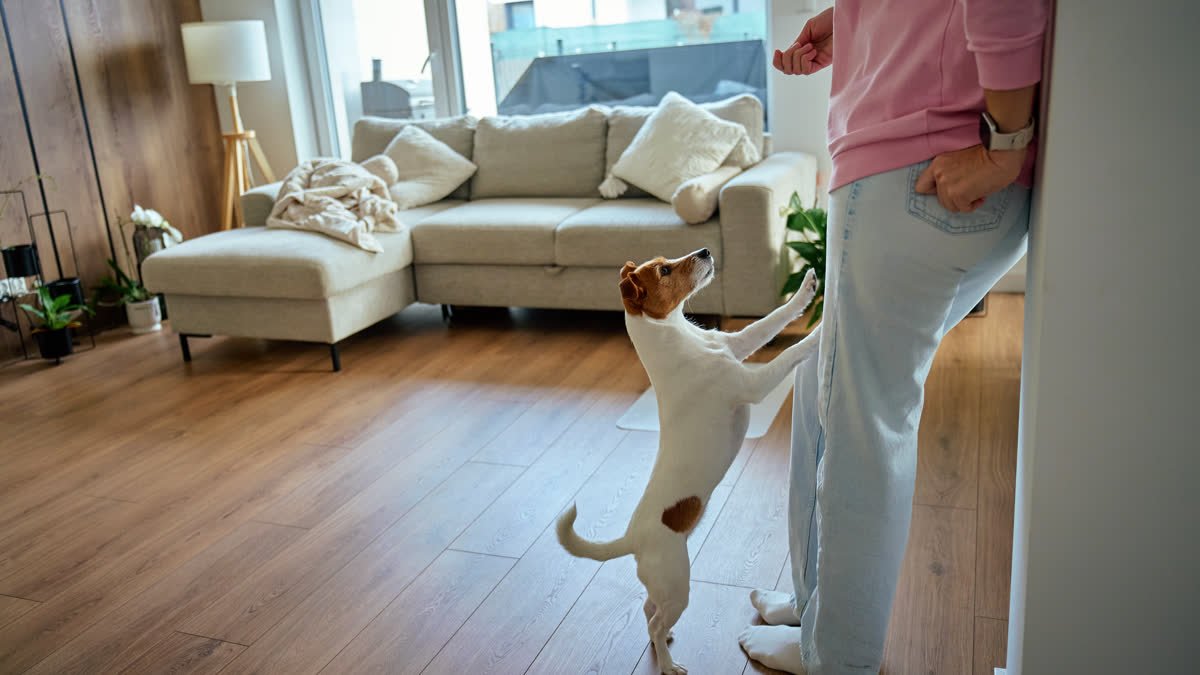
Puppy excited pee is an involuntary leak triggered by big emotion, not a potty training failure. A young bladder plus a flood of arousal during greetings means a little urine slips out before the puppy can stop it. You fix it by keeping greetings boring, lowering the trigger, and rewarding calm. Never scold the dog. The puddle is a reflex, and most puppies grow out of it by 12 to 18 months.
What is puppy excited pee?
Excited peeing is a reflex, not a choice. A puppy gets flooded with emotion, the bladder muscles relax for a split second, and out it comes. Start with the Puppy Training Guide for the full picture, because this issue sits next to potty training but is a different animal entirely.
The classic scene is the front door. You come home, the puppy spins, rolls, and wets the floor while greeting you. Sometimes it happens when a guest arrives, or when you reach down to pet, or when the leash comes out for a walk. The common thread is a spike in arousal the puppy cannot yet regulate.
People lump two things under one label here. Excitement urination happens during pure joy and high energy. Submissive urination happens when the puppy feels social pressure and offers pee as an appeasement signal, often paired with a crouch, a tucked tail, or rolling onto the back.
Excited vs submissive urination
Telling them apart matters because the fix differs slightly. The American Kennel Club groups both under involuntary urination tied to emotion rather than a full bladder, and the body language gives the type away. Watch what the puppy does in the second before the leak.
| Signal | Excited urination | Submissive urination |
|---|---|---|
| Trigger | Greetings, play, high energy | Being approached, leaned over, scolded |
| Body language | Bouncy, wiggly, loose, happy | Crouched, tucked tail, rolling over, ears back |
| What the dog feels | Pure excitement, no off switch yet | Social pressure, wants to defuse you |
| First move | Drain the excitement out of hellos | Drop all pressure, go small and gentle |
Excited pee is too much joy. Submissive pee is too much pressure. Both are involuntary, so neither one is the puppy being bad or spiteful.
Age is the other big factor. Puppies under six months simply have less bladder control, and the muscles that hold urine are still developing. Most dogs grow out of both patterns as that control matures, as long as you avoid drilling the habit deeper.
Some breeds run hotter on this than others. Soft, eager-to-please types lead the pack, so spaniels, retrievers, and the sensitive herding breeds (border collies, shelties) tend to leak more during greetings. If you own one of those, expect a longer runway and lean harder on the calm-greeting work below.
How do you stop excitement urination?
The whole game is lowering arousal at the trigger and never adding pressure. You are not training a command here. You are managing the moment so the reflex stops getting fired ten times a day.
Keep greetings boring
This is the single biggest lever. When you walk in, ignore the puppy for the first minute or two. No eye contact, no high voice, no reaching down. Let the excitement drain before you say hello, and greet only once the body has settled.
Crouch sideways instead of looming over the dog when you do greet. Looming reads as pressure, and pressure feeds the submissive version of this. Pet under the chin rather than over the head, and keep your voice flat and low.
Take the greeting outside or to a spot with an easy-clean floor for a couple of weeks. If the puddle lands on grass, it costs you nothing and the puppy never learns that the hallway is a stress point. Manage the environment while the bladder catches up.
Get ahead of the trigger
Timing beats correction every time. Take the puppy out to pee right before predictable triggers, so the bladder is already empty when the doorbell rings. An empty tank leaks far less than a full one.
Toss a few treats on the floor as you enter. A nose-down puppy hunting for kibble is a calm puppy, and sniffing physically lowers arousal. This sibling piece on a steady potty training schedule pairs well here, because predictable bathroom breaks shrink the size of any accident.
Whatever you do, stay quiet about the puddle. Clean it with an enzyme cleaner so the smell does not linger, and do it without a word. The ASPCA is blunt on this point: scolding a dog for submissive or excited urination makes the problem worse, because the dog pees harder to appease you.
Not sure if it is excitement or pressure?
Read it wrong and you fix the wrong thing. mypooch reads your puppy’s energy and body language from a quick check-in, tells you whether you are looking at excited or submissive urination, and builds a calm-greeting drill sized to your dog’s age, breed, and history. It adjusts the plan as the leaks fade.
Build a calm off switch
Once greetings are quieter, start rewarding the settled state on purpose. Catch the puppy being calm and drop a treat between the paws, so calm starts paying better than the frantic wiggle. You are teaching the dog that low arousal earns good things.
Practice fake arrivals too. Walk out, wait ten seconds, walk back in, and keep it dull. Repeat it five times so the door stops being a giant event. Boring repetition strips the emotional charge out of the trigger faster than any single big fix.
When is the peeing a vet problem?
A wet patch where your dog just slept is the big red flag. Most excited and submissive peeing is pure behavior and bladder age, but some of it is not. You want to separate the two before you spend months training something a course of antibiotics would solve.
Excited and submissive leaks happen during a trigger, while the puppy is awake and emotional. Medical leaks look different. Watch for urine when the puppy is resting or asleep, frequent squatting with little output, straining, blood, a strong odor, or a sudden jump in how much your dog drinks.
Signs to call your vet
- Leaking while the puppy is lying down, sleeping, or fully relaxed
- Straining, blood in the urine, or a strong unusual smell
- Drinking far more water than normal alongside the accidents
- Leaks that keep happening past 18 months despite calm greetings
- Any sudden change in a previously reliable dog
Those signs point at a urinary tract infection or a structural issue, not a feelings problem. One common one in females is spay incontinence, where the bladder leaks during rest or sleep months after the surgery. That is a hormone-driven plumbing problem your vet can treat, not a training issue, so a spayed dog dribbling in her bed needs the clinic, not a greeting drill. The AVMA recommends a vet check whenever a house-training change comes with physical symptoms, because training will never fix an infected or weak bladder. Rule out the body first, then go back to the greeting work.
For the emotional side, patience does most of the heavy lifting. Keep greetings small, keep pressure low, keep the bladder empty before triggers, and let time and maturity finish the job. The behavior you reward today is the behavior you live with in a year.
Common questions
Behavior and timeline
Will my puppy grow out of excited peeing?
Most puppies outgrow excitement urination by about 12 to 18 months as their bladder control matures and greetings stop feeling so huge. Your job is to manage the triggers and keep greetings calm so the habit does not get rehearsed every single day. If the leaking is still happening past a year and a half, or it shows up outside of greetings, ask your vet to rule out a urinary tract infection or another medical cause.
Should I punish my puppy for submissive urination?
No. Punishment makes submissive urination worse, not better. The pee is an appeasement signal, so a puppy who gets corrected for it feels more pressure and leaks more the next time. Look down, stay quiet, fix the trigger, and reward the calm moments. Never scold the dog for the puddle.
Telling it apart and when to worry
How do I tell excited pee from a potty training problem?
Excited and submissive urination happen during a trigger, usually a greeting, a hello at the door, or a moment of high arousal, and the puppy often is not even aware it is happening. A normal potty accident happens because the bladder is full and the puppy could not hold it or could not get outside in time. If the leaks only show up around greetings and excitement, you are dealing with excited or submissive peeing, not a potty schedule gap.
When should I see a vet about my puppy peeing?
See your vet if the leaking is frequent, happens when the puppy is resting or asleep, comes with straining, blood, a strong smell, or excessive drinking, or if it continues well past 18 months despite calm greetings. Those signs point to a possible urinary tract infection, a structural issue, or another medical problem that training will not fix. When in doubt, rule out the body before you blame the behavior.
Build a calm-greeting plan for your puppy
Generic advice gets you started. mypooch builds an excited-pee plan for your exact dog: it sizes the calm-greeting drill to your puppy’s age and energy, tracks how the leaks fade week to week on a vet-shareable timeline, and tells you when the pattern looks medical instead of behavioral. It adjusts daily as your dog grows up.