
Puppy Whining in the Crate: Why and What to Do
A crying puppy at 2am is not manipulating you. Here is how to read the whine, answer the right ones, and teach the crate fast without breaking trust.
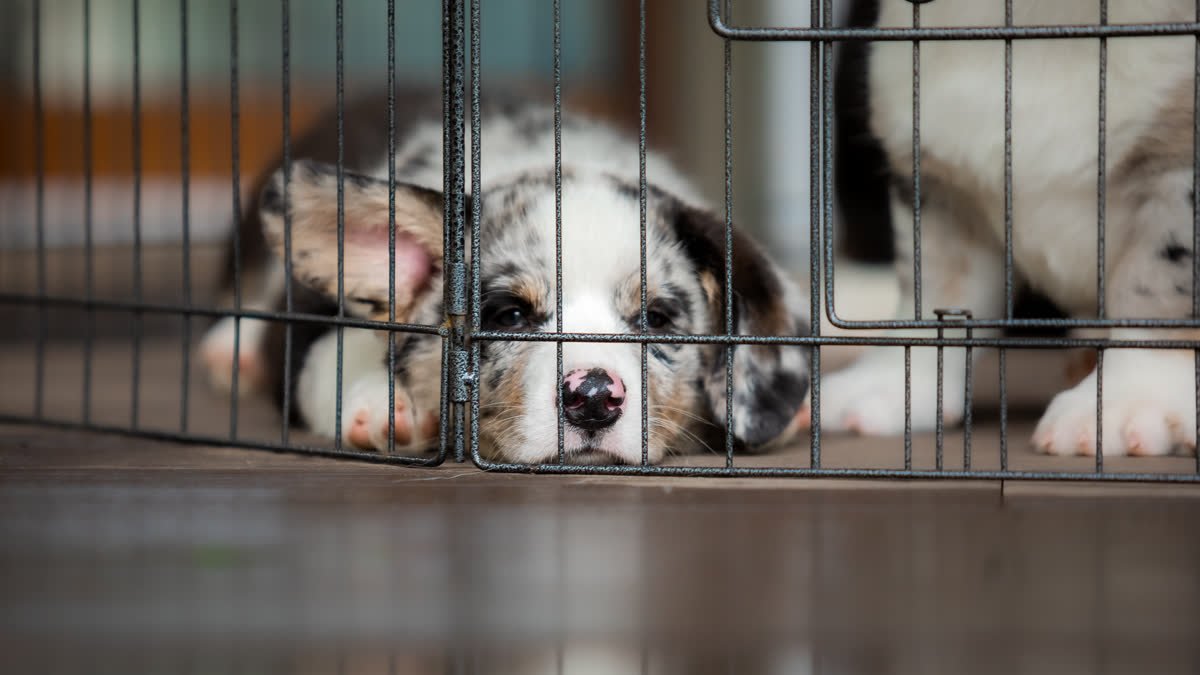
Most puppy whining in the crate is normal protest or a real bathroom need, not bad behavior. Rule out a potty break first, then ignore the low settle-whine that fades on its own. Never let a puppy out while she is screaming, because that teaches noise to work. Build crate time in small, calm steps so the crate becomes a safe place, not a punishment.
Why is my puppy whining in the crate?
Your puppy is whining because something in her world just changed, and crying is the only tool she has to say so. She left her litter, her warmth, and the pile of siblings she slept on every night. Now she is alone in a wire box in a dark room. The whine is communication, not defiance. Start with the Puppy Training Guide for the full picture, then come back here for the crate piece.
I have set up crates in hundreds of homes, and the cause almost always falls into one of four buckets. Knowing which one you are dealing with changes your whole response. Guess wrong and you either reward panic or ignore a genuine need.
The four common drivers are loneliness, a full bladder, too much pent-up energy, and true distress. A bored puppy whines differently than a frightened one. A puppy who needs to pee will not settle no matter how calm the room is. Your job is to read the situation before you react to the sound.
Whining is information. Before you respond, ask which of the four causes you are looking at: alone, bathroom, energy, or real fear. The right answer depends entirely on which one it is.
Loneliness and the new-home shock
Most eight-week-old puppies have never spent a single night alone. The first few nights in your home feel genuinely scary to them. The American Kennel Club describes this early period as a big adjustment, and a little crying is expected, per AKC training guidance. This kind of whine usually fades within a week as the crate starts to feel like a den.
A bladder that physically cannot wait
A young puppy can roughly hold it for one hour per month of age, plus one. So a two-month-old maxes out around three hours overnight. If she wakes and cries at the four-hour mark, that is not a tantrum. She is telling you the truth. Ignoring a real bathroom need teaches her the crate is a place she gets forced to soil herself, which sets potty training back.
Too much fuel in the tank
A puppy crated after a nap and a snooze has nothing to burn off, so she protests. A short play session and a potty trip before crating drains that energy. Tired puppies settle. Wired puppies sing the song of their people all night.
Which whines do I answer, and which do I ignore?
This is where most owners get stuck, so let me make it simple. You answer the body, never the noise. If your puppy has a legitimate need, you meet it in the most boring way possible. If she is just protesting being alone, you wait it out and let the whine fade.
The difference matters because puppies learn fast. Let her out while she is screaming and you have taught her one clear lesson: screaming opens the door. Wait for a pause, even a two-second breath, and reward that instead. You are always reinforcing the quiet, not the crying.
| What it sounds like | Likely cause | Your move |
|---|---|---|
| Low grumble that fades in minutes | Settling in, mild protest | Wait it out, do not engage |
| Sharp, urgent, wakes from sleep | Needs the bathroom | Boring potty trip, straight back |
| Restless before bedtime | Pent-up energy | Play and potty before crating |
| Frantic, non-stop, escalating | True distress or panic | Stop, shorten time, rebuild slowly |
When you do take her out for a genuine bathroom break, treat it like a chore. No talking, no play, no cuddles. Lead on, outside, potty, lead off, back in the crate. Make the night trip so dull that staying in the crate looks like the better deal. This is the same calm, unrewarding handling I cover in crate training a puppy, day and night.
Answer the need, ignore the protest. A boring bathroom trip meets a real need without rewarding the crying. Letting her out mid-scream rewards the scream, and she will scream louder tomorrow.
Not sure if it is a bathroom whine or a tantrum?
This guide gets you started. mypooch builds a crate plan for YOUR exact puppy, factoring in her age, breed, and how the last few nights actually went, then adjusts the bathroom and settle schedule daily as she grows. You stop guessing at 2am.
How do I stop the crying for good?
Stopping the crying is less about that one bad night and more about how you build the crate over the first two weeks. A puppy who learns the crate predicts good things rarely cries about going in. You are building an association, not winning an argument.
Here is the routine I give every new-puppy client. Run it consistently and most pups settle within seven to ten days. Skip steps and you stretch the crying out for weeks.
- Feed meals in the crate with the door open. The crate becomes the place good things happen.
- Toss treats in during the day so she wanders in on her own. Never shove her in as punishment.
- Drain energy first. A short play session and a potty trip before crating, every time, sets her up to sleep.
- Keep the crate close at night. Put it by your bed for the first week so she is not isolated, then move it gradually.
- Reward the quiet. Wait for a pause before you open the door, even a two-second one, so calm gets the payoff.
Set the crate up so she settles
A few small tweaks help most pups settle faster. Drape a light blanket over three sides so the crate feels like a den, leave one side open for airflow, run quiet white noise to mask house sounds, and tuck in a t-shirt you have worn so your scent is right there with her.
Size the crate right, too. It should be big enough to stand, turn, and lie down, and no bigger. A crate the size of a studio apartment lets her potty in one corner and sleep in the other, which kills the den instinct you are trying to use. The ASPCA crate-training guidance favors a snug fit, and a wire divider lets the crate grow with her so you buy one box, not three.
When whining is something bigger
Sometimes the crying is not protest, it is panic. A puppy who drools heavily, claws until her paws bleed, breaks teeth on the bars, or soils a clean crate out of fear is showing real separation distress. That does not improve by waiting it out, and pushing harder makes it worse.
If the crying never eases after one to two weeks of consistent work, talk to your vet first to rule out pain or illness. Then ask for a referral to a credentialed behavior professional. This can overlap with broader dog separation anxiety, which needs its own plan. Do not white-knuckle a genuinely distressed puppy through the night.
Build the crate as a good place over two weeks instead of fighting one bad night. If panic shows up, drooling, bleeding paws, or fear-soiling, that is distress. See your vet, then a credentialed pro.
Common questions
How long should I let a puppy whine in the crate?
If you have already ruled out a bathroom need, give a settle whine a few minutes to fade on its own. Most puppies wind down within five to ten minutes once they learn the crate is safe and boring. If the crying escalates into frantic, non-stop panic that runs past fifteen minutes, that is not a tantrum, it is distress. Stop the session, shorten the time, and build crate comfort back up in smaller steps.
Should I ignore my puppy crying in the crate at night?
Ignore the low, grumbly settle whine that fades. Do not ignore a young puppy who has not emptied at night, because an eight to ten week old pup physically cannot hold it for long. The honest move is a boring bathroom break: out on the lead, potty, straight back to the crate, no play and no talking. You answer the body, not the noise, so you never reward the crying itself.
Worry signals and night crying
Why does my puppy whine in the crate but not when I am holding her?
Because being held removes the thing she is protesting, which is being alone. A puppy who only settles in your arms has learned that crying brings contact. That is a separation problem, not a crate problem. Fix it by building short, calm alone-time away from the crate during the day, then layering the crate back in once she can handle a few minutes of distance without panic.
When should I worry about crate whining instead of training it?
Worry when the crying never improves over one to two weeks of consistent work, when your puppy drools heavily, claws until paws bleed or breaks teeth, or soils a clean crate out of panic. Those are signs of true separation distress, not stubbornness. Talk to your vet first to rule out pain or illness, then ask for a referral to a credentialed behavior professional rather than pushing harder on the crate.
Get a night-by-night crate plan for your puppy
mypooch builds a crate and bathroom schedule for YOUR exact puppy by age, breed, and energy, then adjusts it every day as she matures and the whining changes. Log how each night went and the next plan adapts. It does not replace your vet, it gives you the read a good trainer gives you up front.